You might think of your overcrowded, crooked, or gapped teeth as aesthetic concerns, but these issues can also detract from your dental health. For example, it can be harder to brush and floss thoroughly when some enamel surfaces are inaccessible, or you might develop a bite misalignment that results in a sore, stiff, or locked jaw.
Your dentist can help straighten your smile with Invisalign, but if you’ve completed treatment with braces in the past, you might wonder if you’re an eligible candidate for this service. Continue reading to learn more about why there’s still hope!
Why Did My Teeth Shift Later in Life?
If you’ve had an evenly spaced grin for most of your life, only natural to wonder why your teeth would have shifted out of place later on, especially if you had braces as a youth. But this can happen for various reasons, such as:
- Neglecting orthodontic instructions. If you fail to wear your retainer as directed after finishing braces, your teeth are more likely to shift back to their original positions.
- Arrival of wisdom teeth. These 3rd molars notoriously shift neighboring teeth out of alignment when they grow in, which can be problematic if they show up after you’ve already completed your orthodontic service.
- Daily wear and tear. The pressure placed on them when you bite and chew every day can push them out of their ideal places over time.
- Other habits. You might also develop misalignments if you clench your teeth together subconsciously during the day or overnight.
How Does Invisalign Work?
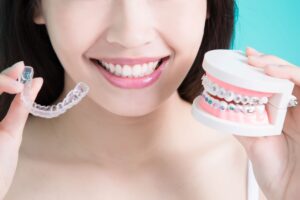
Unlike braces, which rely on bulky metal brackets and wires, this service utilizes a series of removable, transparent trays. They’re customized to fit snugly over your arches and exert consistent, gentle pressure to move your teeth to their proper positions.
But you must wear these clear aligners for 20 to 22 hours daily to prevent potential relapse. Then, after about a week or two, you’ll be directed to switch to the next pair of trays in your series, which accounts for the ongoing movement of your smile.
Can I Get Invisalign After Having Braces?
If you’re worried that you’re too old for Invisalign or that you’re not qualified for treatment if you had braces at some point in your life, you can thankfully set your concerns aside. Generally, your age and previous dental work aren’t the deciding factors that determine whether you’re a good candidate for this service.
Eligibility for this alternative orthodontic option is usually based on other factors, such as whether your mouth is healthy, the severity of the misalignments, and whether you can comply with wear-time guidelines and other treatment requirements.
If you’re still unsure whether Invisalign is right for you, the best way to find out is to schedule an appointment with your dentist!
Meet the Author
Dr. Brad Jetton has over 15 years of experience helping patients build and maintain beautiful, healthy teeth and gums. He earned his Doctor of Dental Surgery from the University of Texas Dental Branch (now the UT Health Houston School of Dentistry), and remains committed to continuing education to stay abreast of the most up-to-date treatments and technology. Today, he offers a complete menu of services, including Invisalign, to meet your unique needs under one roof. If you need to straighten your smile, you can request an appointment on the website or call the office at (713) 257-9470.